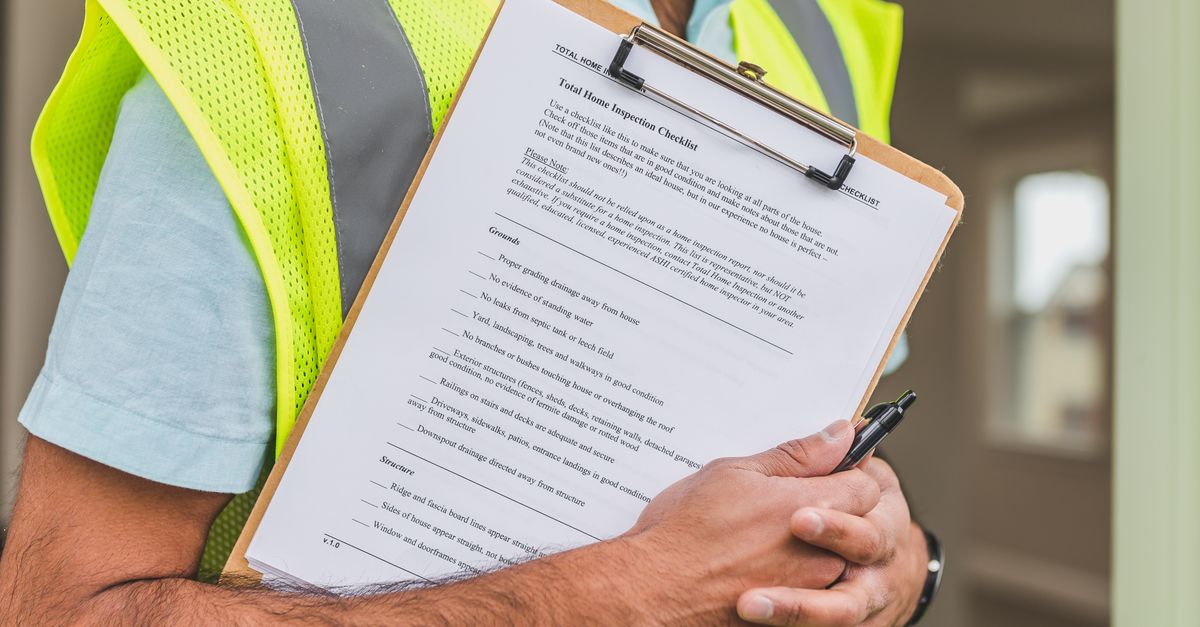
A 4-point inspection is a limited inspection of a home's roof, electrical system, plumbing and HVAC that a Florida insurer may require on an older home before it writes or renews a homeowner's policy. The homeowner pays for it. On the roof, the inspector records three things: age, condition and the type of covering.
That roof line is the one your sales team should care about. The wiring, the pipes and the air handler belong to other trades. The roof belongs to you, and when it is the item holding up a policy, the homeowner has a reason to get a roofer on the property soon.
What is a 4 point inspection for insurance in Florida?
In Florida, it is the insurer's documented look at an older home's four major systems, and if an insurer requests one and it is not provided, the insurer may refuse certain coverage or refuse to insure the property.
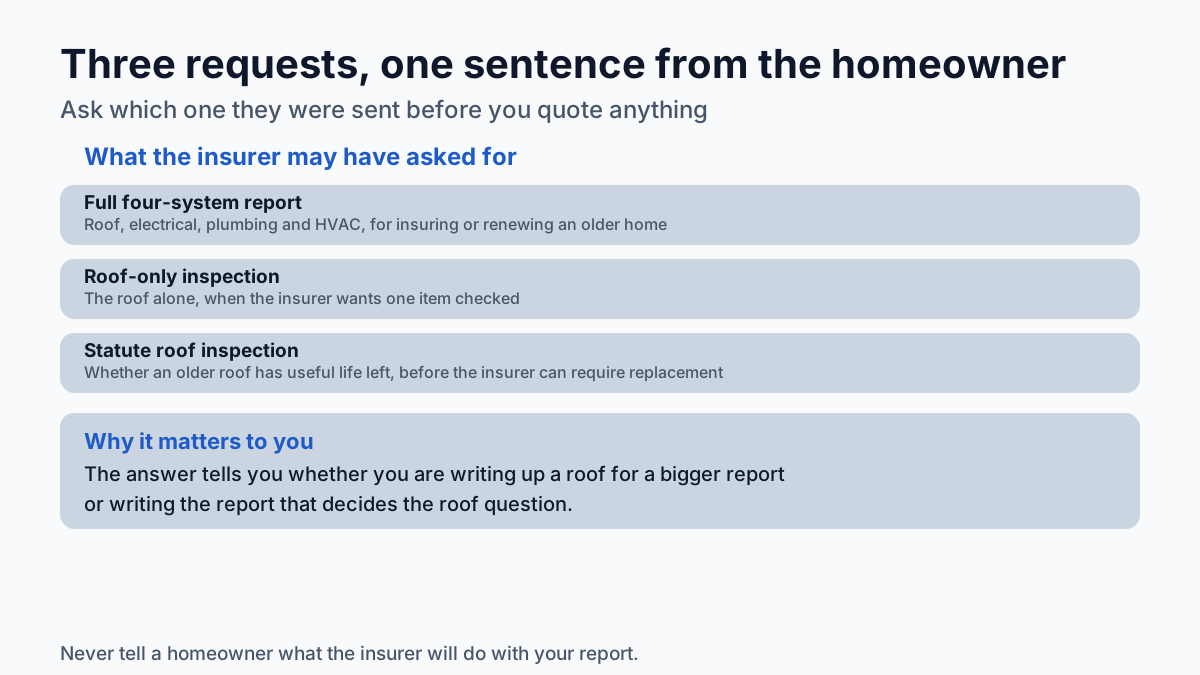
The state's consumer guide adds a detail that matters to roofers: sometimes an insurer asks for an inspection of only one item, such as the roof. A homeowner who says "the insurance company wants an inspection" could mean any of three different requests, and they lead to different conversations.
| Request | What it covers | When it shows up |
|---|---|---|
| 4-point inspection | Roof, electrical, plumbing and HVAC | Insuring or renewing an older home |
| Roof-only inspection | The roof alone | The insurer wants one item checked |
| Roof inspection under Fla. Stat. 627.7011 | Whether the roof has useful life left | A roof at least 15 years old, before the insurer can require replacement |
Ask which one they were sent before you quote anything. The answer tells you whether you are writing up a roof for a bigger report or writing the report that decides the roof question.
Why would my insurance company want to inspect my house?
An insurer wants the four systems on an older house documented before it takes the risk on, and the 4-point report puts their condition in writing from someone who looked.
When "older" starts is up to each company. Security First Insurance, a Florida carrier, says on its own page that homeowners insurance companies often require a 4-point inspection when a home is 20 years old or older, "sometimes even sooner depending on the insurer’s underwriting guidelines." That is one insurer describing the market, not a state rule.
Run that 20-year line across Duval County's houses and the arithmetic is simple. A house finished in 2006 crosses 20 years this year. Next year the 2007 houses join it. The pool of homes facing a 4-point request refills every year on its own, in every ZIP you work, whether or not a storm comes through.
What will fail a home insurance inspection?
Each insurer's underwriting decides what result it will not accept, and on the roof it judges from the age, condition and covering type the inspector writes down.
Age gets the most attention, and Florida law limits how far age alone can carry. Under Fla. Stat. 627.7011, an insurer may not refuse to issue or renew a homeowner's policy solely because of the age of a roof under 15 years old. For a roof at least 15 years old, the insurer must let the homeowner have an authorized inspector look at the roof, at the homeowner's expense, before requiring replacement. And the insurer may not refuse to issue or renew solely because of roof age if that inspection shows 5 years or more of useful life remaining. Roof age runs from the last date 100 percent of the roof surface was built or replaced.
So a 15-year-old roof is not an automatic fail, and the law does not require replacement at 15. What the age does is put weight on the condition write-up. A roof with years left, documented clearly, can keep a policy in place. A roof without them needs a written estimate. Both outcomes call for a roofer who inspects honestly. (How to answer the "is my roof too old to insure" question at the door is its own post on how old a roof can be for insurance in Florida.)
Can a roofing contractor do the roof inspection for the insurer?
A roofing contractor the insurer approves can do the roof inspection that 627.7011 allows on roofs 15 years or older, because the authorized inspectors the statute lists include a roofing contractor.
The full 4-point is a wider document. It also covers wiring, plumbing and HVAC, so check what the homeowner's insurer will accept, for the roof report and anything beyond it, before you agree to fill anything out.
On the roof itself, give the homeowner a report an underwriter can read in a minute. Note the covering type, the age you can support with a permit date or the homeowner's records, the condition with photos of the slopes that matter, and your estimate of remaining life in plain years. A Northeast Florida roof that has taken years of summer sun and salt air near the beach shows its wear in the photos, so let the photos carry the case.
How does a 4-point inspection turn into a re-roof job?
It turns into a job when the inspection shows the roof is near the end of its life and the homeowner asks you for a written estimate; your part is the inspection and the estimate, and coverage questions go to their agent.
When the roof has life left, write it up anyway. The homeowner keeps your report and knows whose name was on it when the roof does come due. When it does not, the estimate you hand over is the next step they were already looking for.
Keep promises out of it. Never tell a homeowner what the insurer will do with your report. The limits on claim talk and on what a roofer can promise are covered in the post on whether homeowners insurance can make you replace your roof.
How do you find the homes heading into a 4-point inspection?
Start with houses old enough to draw a 4-point request whose roofs are 15 or more years past their last full replacement, because those are the homes where the roof is most likely to be the item an insurer questions.
Public building permit and property records are where that work begins. A house with a 1990s build date and no roof permit on file in the last 15 years is a different prospect from one re-roofed in 2019, and you can tell them apart before a canvasser leaves the truck. Working those streets first beats knocking a whole ZIP on a Saturday and hoping the right doors open.
If you would rather start with that list already ranked, Roof Identifier ranks Duval County homes by how likely the roof is due, gives each ZIP to one roofer at a time under Territory Lock, and offers a free ZIP Roof Report for your ZIP.
Frequently asked questions
Who pays for a 4-point inspection in Florida?
The homeowner or applicant pays for the inspection, not the insurer.
Can a homeowner say no to a 4-point inspection?
A homeowner can decline, but if the insurer requested a 4-point or specialized inspection and it is not provided, the insurer may refuse certain coverage or refuse to insure the property.
Does a 4-point inspection check every room?
No. A 4-point is limited to four systems: the roof, electrical, plumbing and HVAC. On the roof it records age, condition and the type of covering.
Does Florida law require a roof to be replaced at 15 years?
No. For a roof at least 15 years old, the insurer must let the homeowner get an authorized inspection at their own expense before requiring replacement, and it may not refuse to issue or renew solely because of roof age if that inspection shows 5 or more years of useful life remaining.
Sources reviewed
- Florida Statutes 627.7011 (Florida Legislature)
- Florida Statutes 627.7011 (Florida Legislature)
- Florida Statutes 627.7011 (Florida Legislature)
- Florida CFO, Homeowners Insurance Overview
- Florida CFO, Homeowners Insurance Overview
- Florida CFO, Homeowners Insurance Overview
- Security First Insurance, 4 point inspection (insurer's own page)
- Security First Insurance, 4-point inspection blog