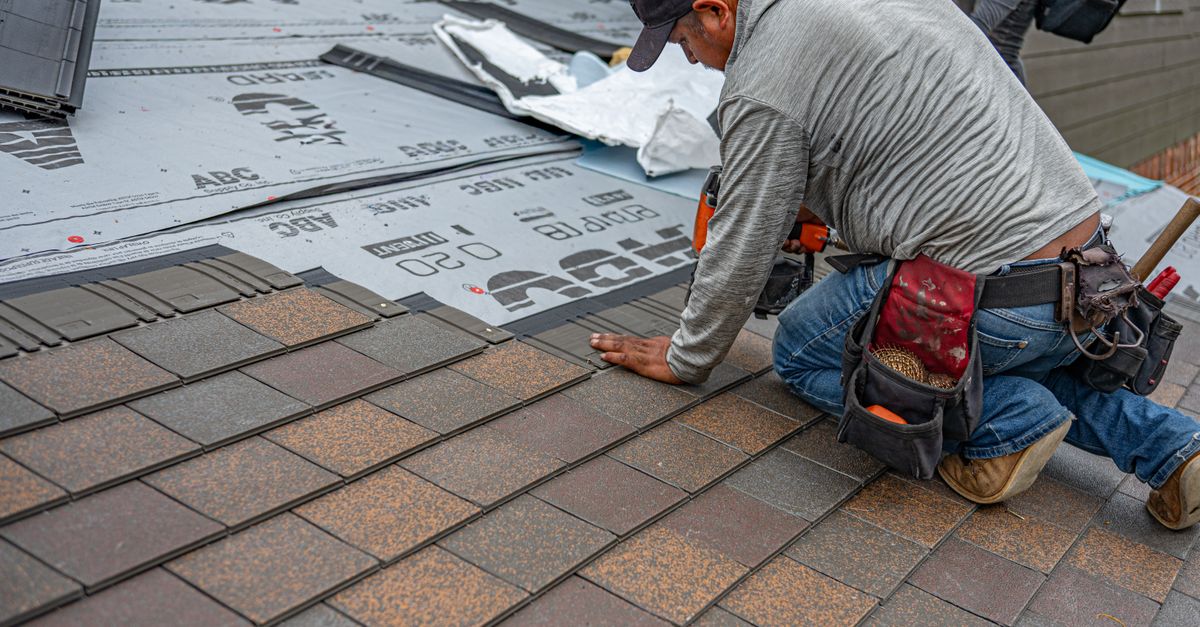
How long it takes to remove a roof depends on four things: the roof's size, how many layers are on it, how steep and cut-up it is, and what the crew finds on the deck once the old covering is off. No fixed hour count holds across jobs, so quote removal as part of a job window you explain, never as a promise.
On most re-roofs the removal is not the long part of the job. It costs you when it runs past what the homeowner was told, because the estimate set an expectation the roof could not meet. Crew-hours by material and roof size are covered in our post on how many hours it takes to replace a roof. This post stays on the tear-off: what stretches it, what the code decides for you, and how to talk about it so the homeowner signs and stays calm on removal day.
What decides how long a roof tear-off takes?
Roof size, layer count, pitch, the material coming off, and the condition of the deck underneath decide how long a tear-off takes, with site access and debris handling right behind them.
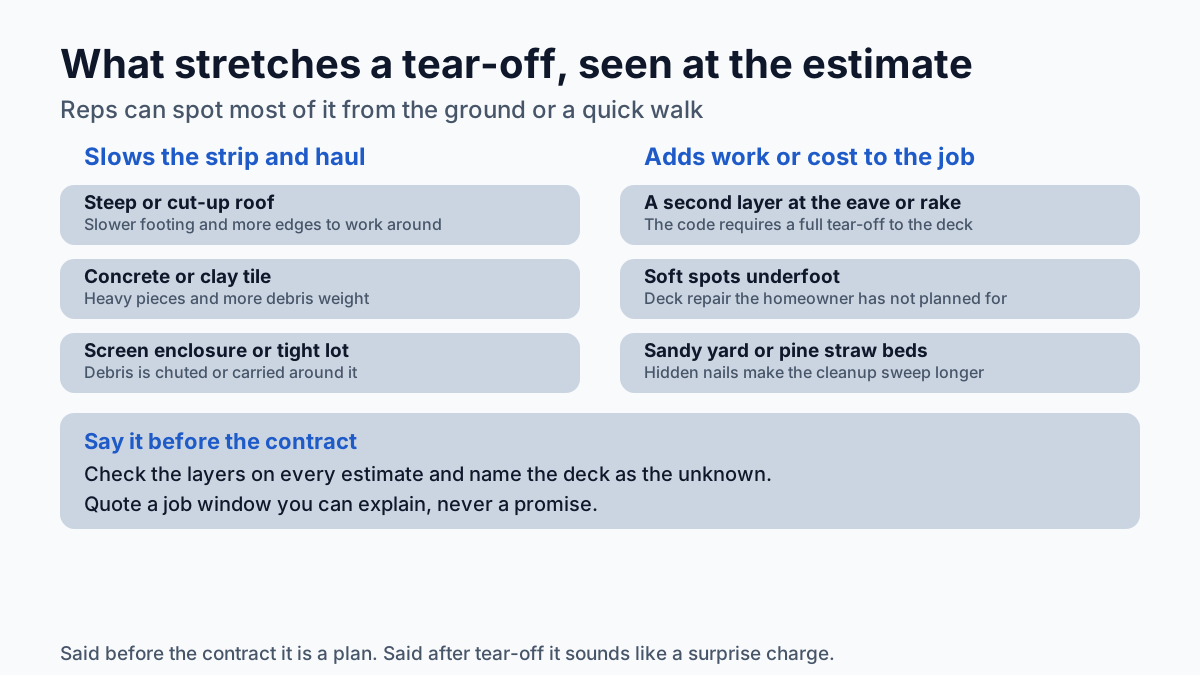
You know the size part. The rest is where estimates go wrong, because most of it is visible from the ground or a quick walk if your rep knows to look.
| What the rep sees at the estimate | Why removal takes longer |
|---|---|
| Two or more layers at the eave or rake edge | Double the material to strip and haul, and a full tear-off is required |
| Steep pitch, or a hip roof with valleys and dormers | Slower footing and more edges to work around |
| Concrete or clay tile | Heavy pieces and a lot more debris weight per square |
| Soft spots underfoot | Deck repair the homeowner has not planned for |
| Pool screen enclosure or a tight lot | Debris has to be chuted or carried around the obstacle |
Access matters more in Northeast Florida than reps tend to price in. A screen enclosure over the back patio means nothing gets thrown off that side. Pine straw beds along the foundation and sandy yards both hide roofing nails, so the cleanup sweep takes longer than it would on a lawn. None of this changes the trade. It changes the number of hours between the first shingle coming off and the driveway being clear.
Does a second layer of shingles mean a full tear-off?
Yes. Where the existing roof has two or more layers of covering, the Florida Building Code requires removing everything down to the deck before the new roof goes on.
A technical article from the Florida Roofing and Sheet Metal Contractors Association by Mike Silvers, CPRC, quotes the Existing Building volume of the code on this point: new coverings shall not be installed without first removing all existing layers down to the roof deck where the roof has "two or more applications of any type of roof covering."
For the seller, that rule settles an argument before it starts. If your rep counts two layers at the estimate, the full tear-off belongs in the quote from the first draft, with the extra hauling and dumpster weight priced in. The homeowner is not choosing a premium option. The code made that choice, and a rep who says so plainly sounds like a professional instead of an upseller.
Have your reps check layer count on every estimate. Lift a tab at the eave or look at the edge along the rake. It takes a minute, and it is the single fact most likely to stretch a removal past what the homeowner expected.
Can the homeowner shower while the roof is being torn off?
Answer it from your own job plan: if nothing on that job touches the plumbing, tell the homeowner the water stays on and they can stay home through the tear-off.
This is one of the questions homeowners ask at the kitchen table, and it is a good sign when they do. They are picturing removal day. Answer it, then tell them the parts they did not ask about: it will be loud, dust can drift down into the attic, cars should be out of the driveway before the crew arrives, and pets are better inside with the windows shut. A homeowner who hears that at the estimate does not call your office in a panic at 8 a.m. on removal day.
Is removing a roof hard to do?
Removing a roof is heavy, exposed work, and the part that takes judgment is what the tear-off uncovers on the deck.
Nobody can see the decking from the driveway. Soft plywood around a chimney, along the eaves or under an old leak only shows up once the covering is off. A good crew strips in sections it can dry in the same day, so the house is never left open when a summer afternoon storm builds over the river. That pace is slower than tearing the whole roof off at once, and it is the right way to do it.
Give your reps one line for this: the deck is the one thing nobody can see until the old roof is off, so here is how we handle it if we find bad wood. Said before the contract, it is a plan. Said after the tear-off, it sounds like a surprise charge. How deck repair fits into the full sequence is covered in our post on the new roof installation process.
Which roofs are coming up for removal next?
The roofs most likely to come up for removal are the ones at or past 15 years, because Florida's homeowner-insurance statute treats 15 years as the line where an insurer can start asking about the roof.
The rule is narrower than many homeowners think. An insurer may not refuse to issue or renew a homeowner's policy solely because of the age of a roof that is less than 15 years old. For a roof at least 15 years old, the insurer must let the homeowner have it inspected by an authorized inspector, at the homeowner's expense, before requiring replacement, and it may not refuse solely because of age if that inspection shows 5 or more years of useful life left. Florida law does not require a roof to come off at 15 years.
What that means for your pipeline: a homeowner whose insurer has asked about roof age is already thinking about removal, timing and disruption. That is the homeowner who asks how long the tear-off takes, and the rep who answers it honestly is the one who gets the job. In subdivisions where the builder roofed most houses in the same few years, those roofs tend to come due on the same streets at once.
Finding those streets before other roofers do is the work Roof Identifier does. It ranks Duval County homes by how likely the roof is due and keeps each ZIP to one roofer at a time, and you can ask for a free ZIP Roof Report for your ZIP or check whether your ZIP is still open.
Frequently asked questions
Can a crew lay new shingles over two existing layers in Florida?
No. Where the existing roof has two or more applications of roof covering, the Florida Building Code, as quoted by the Florida Roofing and Sheet Metal Contractors Association, requires removing all layers down to the deck before the new covering goes on.
Does Florida law require a roof to be replaced at 15 years?
No. For a roof at least 15 years old, an insurer must allow an inspection by an authorized inspector at the homeowner's expense before requiring replacement, and it may not refuse to issue or renew solely because of roof age if the inspection shows 5 or more years of useful life remaining.
Should a rep promise a homeowner a set tear-off time?
No. Explain what drives removal time (layers, pitch, material and the deck) and give the job window, naming deck condition as the one thing nobody can see until the old roof is off.
What can slow a roof tear-off down?
Extra layers, a steep or cut-up roof, heavy concrete or clay tile, damaged decking, and tight access such as a pool screen enclosure all add time. Sandy yards and pine straw beds also lengthen the nail cleanup.