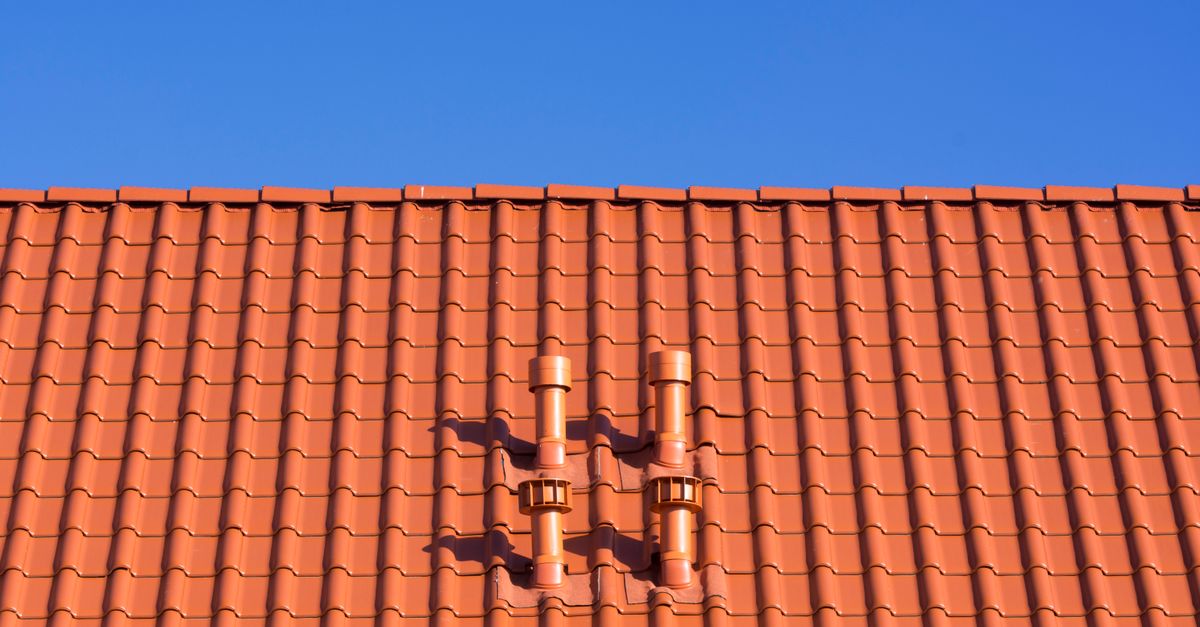
An asphalt shingle roof has a published life expectancy of 20 years for 3-tab shingles and 30 years for architectural shingles. The chart those numbers come from also says hot climates drastically reduce asphalt shingle life, so in Northeast Florida a shingle roof is better judged by its inspected condition than by its age on paper.
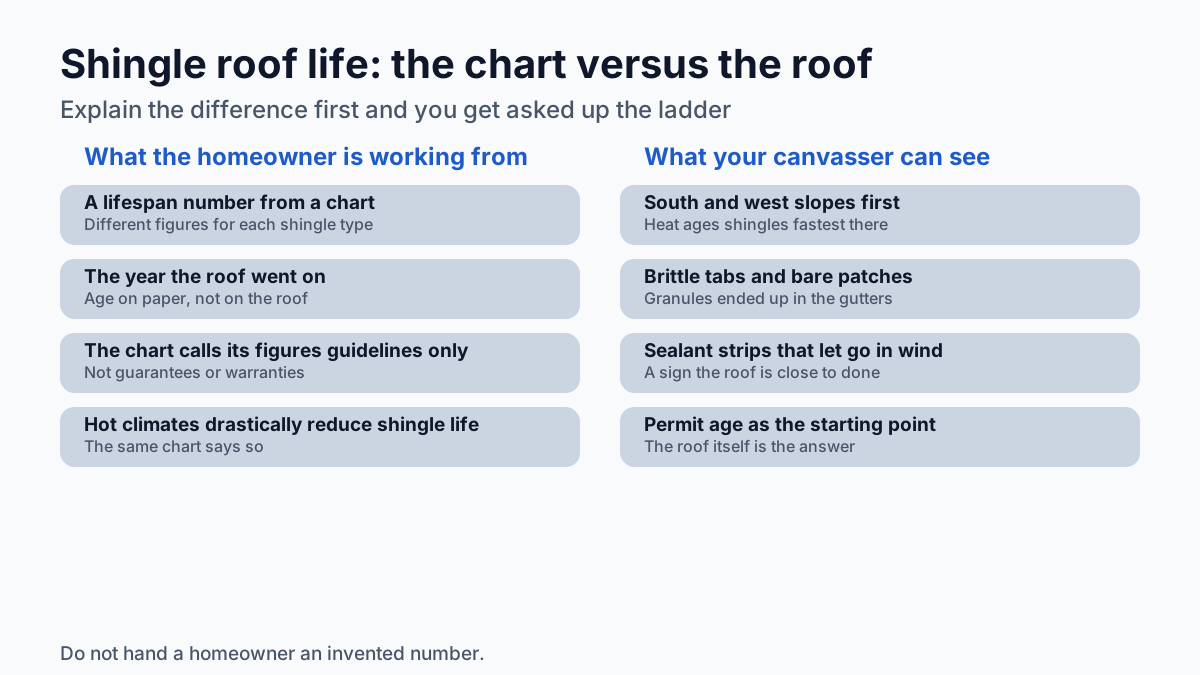
The gap between the chart and the roof is where re-roof work sits. A homeowner who had architectural shingles put on in 2010 may think the roof has more than a decade left. Your canvasser, standing in the driveway, may be looking at a roof that is close to done. The homeowner is working from a number. You are working from the roof. The roofer who explains that difference first is the one who gets asked up the ladder.
What is the life expectancy of a roof shingle?
InterNACHI's estimated life expectancy chart lists 3-tab asphalt shingles at 20 years and architectural asphalt shingles at 30 years.
| Shingle type | Chart life expectancy | What the chart adds |
|---|---|---|
| Asphalt, 3-tab | 20 years | Hot climates drastically reduce asphalt shingle life |
| Asphalt, architectural | 30 years | The same heat warning applies |
The chart is careful about what those numbers are. Its figures "should be used as guidelines only, and not relied upon as guarantees or warranties." That line earns its keep on a doorstep. You can correct a homeowner's number without calling their roof bad, because the people who publish lifespan figures say plainly not to bank on them.
Each shingle type has its own sales story. Our separate posts on 3-tab shingles and on architectural shingles lifespan cover how to spot each one from the street and which homes tend to have them.
Why does Florida heat cut a shingle roof's life short?
Heat speeds up the aging of asphalt shingles, and the same chart that sets the 20- and 30-year guidelines notes that hot climates drastically reduce asphalt shingle life.
On a Duval County roof, look at the south- and west-facing slopes first.
Your crews already know what the result looks like on a tear-off. Brittle tabs. Bare patches where the granules ended up in the gutters. Sealant strips that let go in the first strong wind.
Do not hand a homeowner an invented number. What you can say with confidence: the age on the permit is the starting point, and the roof itself is the answer.
Is a 20 year old roof too old?
A 20-year-old shingle roof has reached the chart's guideline for 3-tab and is two-thirds of the way through the guideline for architectural, and in Florida heat either one deserves a close inspection.
For your pipeline, though, 20 years is late. The line that matters more in this state comes five years earlier, because 15 years is where roof age enters the homeowner's insurance picture.
What does Florida's 15-year roof rule mean for shingle roofs?
Under Florida law, an insurer may not refuse to issue or renew a homeowner policy solely because of the age of a roof that is less than 15 years old.
Past that point, the statute changes the conversation. For a roof at least 15 years old, the insurer must allow the homeowner to have a roof inspection performed by an authorized inspector, at the homeowner's expense, before requiring replacement as a condition of the policy. And the insurer may not refuse to issue or renew solely because of roof age if that inspection shows the roof has 5 years or more of useful life remaining.
The rule is easy to misread in both directions. Florida law does not require a shingle roof to be replaced at 15 years. It also does not protect a 15-year-old roof automatically. It puts the weight on an inspection and on how much life the roof has left.
So roof age is your reason to start the conversation. The opening can be plain: the roof is past 15 years, here is what the state rule says, and here is what I see on it. Leave anything about coverage to the homeowner and their insurance agent. Do the math on your target streets, too. A neighborhood that was re-roofed in 2011 crosses 15 years in 2026.
Does a 30 year shingle really last 30 years?
Thirty years is the chart's guideline for architectural shingles, and the same chart says hot climates drastically reduce asphalt shingle life, so a Florida homeowner should not count on getting the full 30.
For a seller, this is the most useful gap in the whole topic. Picture a street of homes that got architectural shingles in 2008. On the label, those owners have years left. Under the state rule, those roofs passed the 15-year mark in 2023. On the roof itself, your canvasser can see where they actually stand. The full breakdown of when an architectural roof becomes a prospect lives in our architectural shingles lifespan post.
Can a shingle roof last 50 years?
The life expectancy chart gives no support for a 50-year asphalt shingle roof; it lists 30 years for architectural shingles and 20 years for 3-tab.
When a homeowner quotes a number far past those, ask where the number came from, and do not argue about a warranty term. Point to the chart's guideline, point to the heat, and then point to the roof.
How do you find shingle roofs that are near the end of their life?
Start with roof age estimated from public building permit and property records, narrow to the homes past 15 years, then confirm the roof's condition in person before you pitch.
The common mistake is working a whole ZIP. A crew that spends a Saturday knocking doors in a neighborhood re-roofed in 2019 spends the day on homes with plenty of life left. The same crew on streets where the last re-roof permit is 15 or more years old is talking to homeowners for whom roof age is already a live question. Build the route by street. Put mailers on the homes that fit. Save the doors for the blocks with the oldest roofs.
A homeowner found this way has not filled out a lead form and called three roofers. You are the first one at the door, which is a better spot than racing other companies for a shared lead.
If you want that sorting done for you in Duval County, Roof Identifier ranks homes by how likely the roof is due, keeps each ZIP to one roofer under Territory Lock, and offers a free ZIP Roof Report for your ZIP so you can check it against what your crews see.
Frequently asked questions
How often should you have your roof shingles replaced?
InterNACHI's chart gives 20 years for 3-tab and 30 years for architectural asphalt shingles as guidelines, and it says hot climates drastically reduce asphalt shingle life. In Florida, the roof's inspected condition is a better guide to replacement timing than the calendar.
Does Florida law require a shingle roof to be replaced at 15 years?
No. Fla. Stat. 627.7011 bars an insurer from refusing to issue or renew a homeowner policy solely because of the age of a roof under 15 years, and for a roof 15 years or older the insurer must allow an inspection by an authorized inspector, at the homeowner's expense, before requiring replacement.
What happens if a roof inspection shows 5 years of life left?
Under Fla. Stat. 627.7011, an insurer may not refuse to issue or renew solely because of roof age if the inspection shows the roof has 5 or more years of useful life remaining.
Which shingle roofs should a roofer prospect first?
Homes whose roofs are 15 years or older, found through public building permit and property records and then confirmed by looking at the roof. At that age, roof age has entered the homeowner's insurance picture under Florida law.
Sources reviewed
- InterNACHI Estimated Life Expectancy chart (asphalt shingles 3-tab)
- InterNACHI Estimated Life Expectancy chart (architectural)
- InterNACHI chart note on hot climates
- InterNACHI chart disclaimer
- Fla. Stat. 627.7011(5)(b), roofs under 15 years
- Fla. Stat. 627.7011(5)(c), inspection for roofs 15 years and older